Home Buyers’ Plan in Canada: Using Your RRSP to Buy a Home
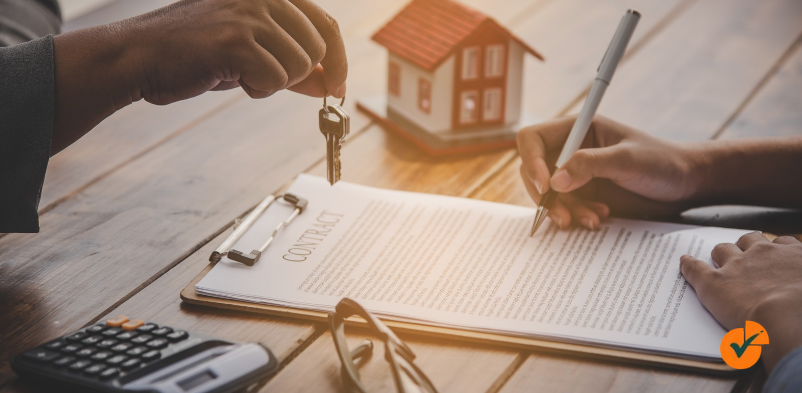
Saving for your first home while also contributing to retirement can feel like competing goals. The federal government’s Home Buyers’ Plan (HBP) is designed to help with that challenge. It allows first-time homebuyers to withdraw money from their RRSP to put toward a home purchase, and then repay it back over time.
This guide explains everything you need to know about the HBP: who qualifies, how much you can take out, how repayment works, and what happens if you fall behind.
What Is the Home Buyers’ Plan?
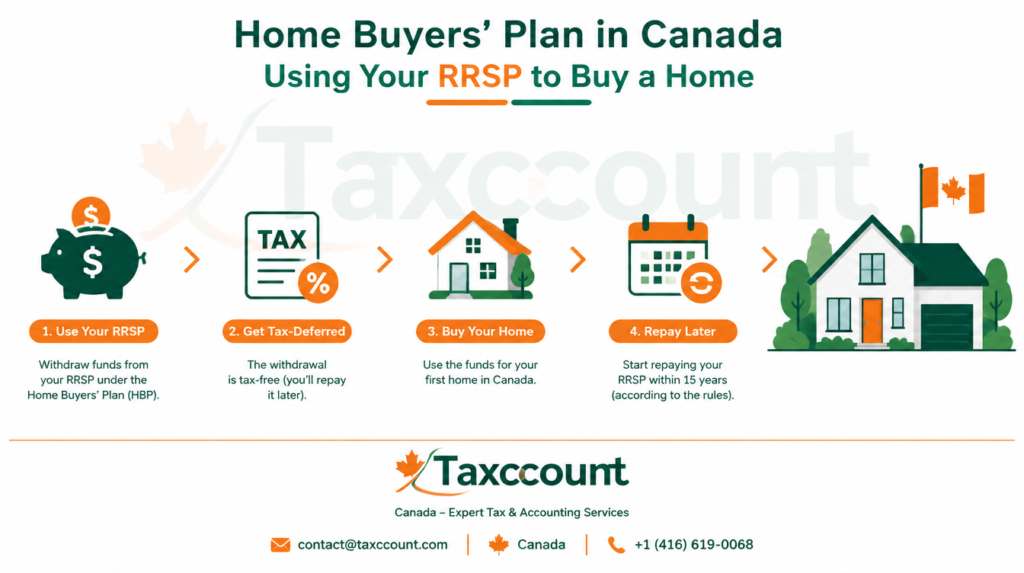
The Home Buyers’ Plan is a federal program that allows eligible Canadians to withdraw up to $35,000 from their Registered Retirement Savings Plan (RRSP) tax-free to buy or build a qualifying home.
Normally, withdrawing from an RRSP triggers income tax because the withdrawal is added to your income. Under the HBP, the withdrawal is not taxed at the time you take it out, as long as you repay it back into your RRSP over the following 15 years.
Both partners in a couple can each withdraw up to $35,000, giving a combined maximum of $70,000 for a couple buying a home together.
Let Taxccount walk you through the process
☎️ Get HelpWho Is Eligible for the HBP?
To participate in the HBP, you must meet all of the following conditions:
1. First-time home buyer
You must be a first-time home buyer. This means you have not owned a home that was your principal residence at any time during the four calendar years before the year you make the HBP withdrawal, plus the current year up to the time of withdrawal.
Note: If you have owned a home in the past but have not lived in one you own for the required period, you may qualify again.
2. Written agreement to buy or build
You must have a written agreement to buy or build a qualifying home. The home must be located in Canada.
3. Canadian residency
You must be a Canadian resident at the time of the withdrawal.
4. RRSP funds must have been in the account for 90 days
Contributions to your RRSP must have been there for at least 90 days before you can withdraw them under the HBP. Contributions made shortly before the withdrawal do not qualify.
5. Intention to occupy the home
You must intend to occupy the home as your principal residence within one year of buying or building it.
Special rule for people with disabilities:
If you are a person with a disability, or if you are buying a home for a related person with a disability to better meet their needs, different eligibility rules apply and you may not need to be a first-time buyer.
How Much Can You Withdraw?
The maximum withdrawal under the HBP is $35,000 per person. If you are buying with a partner and you both qualify, you can each withdraw $35,000 for a combined total of $70,000.
You can make multiple withdrawals in the same calendar year as long as your total does not exceed $35,000.
The withdrawn amount must be used to buy or build your qualifying home before October 1 of the year following the year of withdrawal. If the home purchase falls through, you can cancel the HBP participation and re-contribute the amount.
How to Make an HBP Withdrawal
To make a withdrawal under the HBP:
1. Complete Form T1036 (Home Buyers’ Plan Request to Withdraw Funds from an RRSP). You give this form to your financial institution.
2. Your financial institution will transfer the requested amount to you without withholding tax, as long as the form is completed correctly.
3. The withdrawal is reported on a T4RSP slip, but it is not included in your taxable income for the year because it is an HBP withdrawal.
Repaying Your HBP Withdrawal
You must start repaying the withdrawn amount to your RRSP starting the second year after the year you made your HBP withdrawal.
Repayment schedule:
- You have 15 years to repay the full amount
- Each year, you must repay at least one-fifteenth (1/15) of the amount you withdrew
- You make repayments by contributing to your RRSP and designating the contributions as HBP repayments on your tax return
For example:
- You withdrew $30,000 under the HBP
- Your minimum annual repayment is $30,000 / 15 = $2,000 per year
- You contribute $2,000 to your RRSP and designate it as a repayment on Schedule 7 of your return
You can repay more than the minimum each year, which reduces future obligations. You can also make multiple smaller contributions throughout the year that add up to the minimum.
What Happens If You Do Not Repay?
If you do not make the required repayment in a given year, the amount you were supposed to repay is added to your income for that year and taxed at your marginal rate. Effectively, the missed repayment becomes taxable just like a regular RRSP withdrawal.
This is why it is important to track your repayment obligations carefully. Your annual Notice of Assessment from the CRA will show your HBP balance owing, which helps you stay on track.
HBP and the First Home Savings Account
The First Home Savings Account (FHSA) was introduced by the federal government as another tool for first-time homebuyers. Like the HBP, it can be used toward a qualifying home purchase.
You can use both the HBP and the FHSA together for the same home purchase, giving you even more tax-free funds to put toward your down payment.
The FHSA does not require repayment — unlike the HBP, funds withdrawn from an FHSA for a qualifying home purchase do not need to be paid back.
Table of Summary
| Home Buyers’ Plan (HBP) Topic | Key Information |
|---|---|
| What Is the Home Buyers’ Plan? | The HBP is a federal program that allows eligible Canadians to withdraw money from their Registered Retirement Savings Plan (RRSP) to buy or build a qualifying home without paying tax on the withdrawal at that time. |
| Maximum Withdrawal | Eligible individuals can withdraw up to $35,000 from their RRSP under the HBP. |
| Combined Couple Withdrawal | If both partners qualify, each can withdraw up to $35,000, allowing a combined maximum of $70,000 toward a home purchase. |
| First-Time Home Buyer Requirement | Generally, you must not have lived in a home that you owned as your principal residence during the four calendar years before the withdrawal year and the current year up to the withdrawal date. |
| Previous Homeowners | Individuals who previously owned a home may qualify again if they meet the applicable first-time buyer rules. |
| Written Purchase Agreement | You must have a written agreement to buy or build a qualifying home located in Canada. |
| Canadian Residency | You must be a Canadian resident at the time of the HBP withdrawal. |
| 90-Day RRSP Holding Period | RRSP contributions generally must remain in the account for at least 90 days before they can be withdrawn under the HBP. |
| Principal Residence Requirement | You must intend to occupy the qualifying home as your principal residence within one year of buying or building it. |
| Special Disability Rules | Different eligibility rules may apply to people with disabilities or those buying a home for a related person with a disability to better meet their needs. |
| Withdrawal Limits and Timing | Multiple withdrawals may be made in the same calendar year, provided the total does not exceed $35,000 per eligible individual. The funds must be used for the qualifying home by October 1 of the year following the withdrawal year. |
| If the Home Purchase Falls Through | The article states that HBP participation may be cancelled and the withdrawn amount re-contributed if the home purchase does not proceed. |
| Form T1036 | Complete Form T1036, Home Buyers’ Plan Request to Withdraw Funds from an RRSP, and submit it to your financial institution to request an HBP withdrawal. |
| Tax Treatment of Withdrawal | A qualifying HBP withdrawal is not included in taxable income at the time of withdrawal, provided the program requirements are met. |
| T4RSP Slip | The financial institution reports the HBP withdrawal on a T4RSP slip, even though a qualifying withdrawal is not included in taxable income for that year. |
| HBP Repayment Period | The withdrawn amount must generally be repaid to the RRSP over 15 years. |
| When Repayments Begin | Repayments generally begin in the second year after the year of withdrawal. |
| Minimum Annual Repayment | You must generally repay at least one-fifteenth of the original withdrawal amount each year over the repayment period. |
| Repayment Example | If you withdraw $30,000, the minimum annual repayment is $2,000, calculated as $30,000 divided by 15. |
| How to Make Repayments | Contribute to your RRSP and designate the amount as an HBP repayment on your tax return using Schedule 7. |
| Additional Repayments | You can repay more than the annual minimum or make multiple smaller contributions that add up to the required repayment. Additional repayments can reduce future obligations. |
| Missed Repayments | Any required amount not repaid for a particular year is generally added to your taxable income for that year and taxed at your marginal rate. |
| Tracking Your HBP Balance | Your CRA Notice of Assessment shows your outstanding HBP balance and can help you monitor repayment obligations. |
| HBP and FHSA Together | Eligible buyers can use both the HBP and a First Home Savings Account (FHSA) toward the same qualifying home purchase. |
| HBP vs. FHSA Repayment | HBP withdrawals must generally be repaid, while qualifying FHSA withdrawals do not need to be repaid. |
| If Your Spouse Has Owned a Home | Your eligibility depends on your own home ownership history and the applicable HBP rules. You may qualify even if your spouse does not. |
| If Your RRSP Balance Is Small | You can withdraw the amount available in your RRSP, up to the $35,000 limit. There is no minimum withdrawal requirement. |
| Buying a Home but Not Moving In | You must intend to occupy the home as your principal residence within one year. If circumstances change, professional advice may help clarify the effect on your HBP eligibility. |
| Key Takeaway | The HBP can help eligible buyers fund a down payment using RRSP savings. Before withdrawing, confirm your eligibility, ensure funds meet the 90-day holding requirement, and plan for the repayment schedule to avoid unexpected taxable income. |
Frequently Asked Questions
Can I use the HBP if I have never owned a home but my spouse has?
In some cases, yes. Your own eligibility depends on your personal home ownership history, not your spouse’s. If you personally meet the first-time buyer definition, you may qualify even if your spouse does not.
My RRSP is small. Can I still use the HBP?
Yes. You can withdraw whatever amount is available in your RRSP, up to the $35,000 maximum. There is no minimum withdrawal requirement.
Can I contribute to my RRSP and immediately withdraw under the HBP?
No. Funds must be in your RRSP for at least 90 days before you can withdraw them under the HBP.
What if I buy a home and then sell it before moving in?
You must intend to use the home as your principal residence within one year. If circumstances change, speak with a tax professional to understand how this affects your HBP status.
Conclusion
The Home Buyers’ Plan is a practical tool for Canadians looking to use their RRSP savings toward a first home purchase. The tax-free withdrawal of up to $35,000 can make a meaningful difference to your down payment.
The key is to understand the repayment rules and follow through. Missing repayments means paying income tax on amounts you initially withdrew tax-free, which defeats the purpose of the program.
How Taxccount Canada Can Help
Using the Home Buyers’ Plan can help eligible buyers access retirement savings for a home purchase, but withdrawal timing, eligibility, repayment planning, and RRSP deduction rules all matter.
Taxccount Canada provides personal tax preparation and tax-planning services to individuals and families across Canada. Our team can help you understand the tax implications of an HBP withdrawal, review the reporting requirements, and plan for future repayments.
Contact Taxccount Canada to book a free consultation and discuss your home-buying tax questions.
Book a free consultation with Taxccount today
☎️ Get HelpThis is general information only and not professional advice. Consult a professional before acting.
 Written and fact-checked by Udit Gupta
 Written and fact-checked by
Ex Big4, Ernst & Young, Deloitte | International & Cross-Border Tax Specialist | CPA Canada In Depth Tax Training | Licensed Chartered Accountant from ICAI & MIA
Udit Gupta has over 15 years of experience helping corporations & business owners with corporate structuring, corporate tax filing, bookkeeping, payroll, GST/HST, cross-border tax and CRA representation. Big 4 trained at Ernst & Young and Deloitte, and qualified as a Chartered Accountant in India and Malaysia, he founded accounting firm in 2014 to serve entrepreneurs, startups and non-resident business owners across Canada. View Full Member Bio.
Indian Institute of Chartered Accountant Member No. (521458) | Malaysian Institute of Accountants Membership number (CA 44667) | Ex Big4,Ex Ernst & Young (EY), Ex-Deloitte | CPA Canada In-Depth Tax Training 19 Dec 2023, 12 Jul 2022, 5 Jul 2023
Editorial policy. Every article is researched against primary sources — the Income Tax Act, CRA publications and CPA Canada.