First Home Savings Account (FHSA) in Canada: A Complete Guide
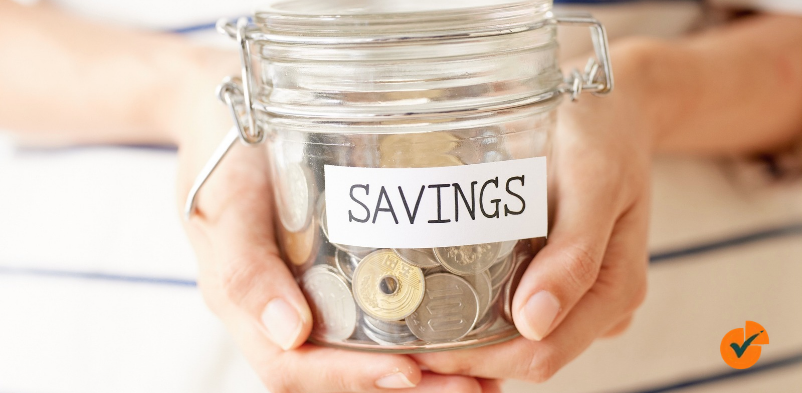
The First Home Savings Account (FHSA) is a relatively new registered account in Canada, introduced by the federal government to help first-time homebuyers save for a home. It combines the best features of both the RRSP and the TFSA, offering tax deductions on contributions and tax-free withdrawals when the money is used to purchase a first home.
If you are planning to buy your first home in Canada, the FHSA is one of the most powerful tools available to you. This guide covers everything you need to know.

What Is the First Home Savings Account?
The FHSA is a registered savings account that allows eligible Canadians to save up to $40,000 over their lifetime to buy a first home. Contributions are tax-deductible (like an RRSP), and qualifying withdrawals are completely tax-free (like a TFSA).
Ready to open an FHSA
☎️ Get HelpThis combination makes the FHSA extremely tax-efficient for first-time buyers:
- You get a deduction when you contribute
- You pay no tax when you take the money out to buy a home
- Any investment growth inside the account is also tax-free
Who Can Open an FHSA?
To open an FHSA, you must:
1. Be a Canadian resident
2. Be at least 18 years old
3. Be a first-time home buyer
For FHSA purposes, a first-time home buyer means you have not owned a qualifying home that was your principal residence at any time during the four years before you open the account or during the current calendar year.
Note: This is the same definition used for the Home Buyers’ Plan (HBP), so eligibility is similar.
Contribution Limits
The FHSA has two key contribution limits:
1. Annual limit: You can contribute up to $8,000 per year to your FHSA.
2. Lifetime limit: You can contribute a total of $40,000 over your lifetime.
Unused annual room carries forward by one year only. If you contribute less than $8,000 in a given year, you can carry forward the unused portion (up to $8,000) to the next year. However, carry-forward room does not accumulate beyond one year.
For example:
- In Year 1, you contribute $3,000 (out of the $8,000 maximum)
- In Year 2, you can contribute up to $8,000 + $5,000 carry-forward = $13,000 (subject to the $40,000 lifetime limit)
Contributions above your annual or lifetime limit are subject to a penalty tax of 1% per month on the excess amount.
Tax Benefits of the FHSA
The FHSA offers two major tax benefits:
1. Tax deduction on contributions
Like RRSP contributions, FHSA contributions reduce your taxable income for the year. If you contributed $8,000 and you are in a 40% marginal tax bracket, you save $3,200 in income tax.
Unused deduction room from prior years can be carried forward (unlike RRSP, where the deduction must be taken in the year of contribution or carried forward, the FHSA also allows this flexibility).
2. Tax-free growth and withdrawals
All investment growth inside the FHSA — interest, dividends, capital gains — is tax-free. When you withdraw funds to buy a qualifying home, the full amount (contributions plus growth) comes out tax-free.
Qualifying Withdrawals
To make a tax-free withdrawal from your FHSA, you must:
1. Be a first-time home buyer at the time of withdrawal
2. Have a written agreement to buy or build a qualifying home in Canada
3. Intend to occupy the home as your principal residence within one year of buying or building it
4. Be a Canadian resident at the time of the withdrawal
5. Not have previously made a qualifying FHSA withdrawal
Withdrawals for purposes other than buying a qualifying home are added to your income and taxed, similar to an RRSP withdrawal.
What Happens to Unused FHSA Funds?
If you open an FHSA but do not buy a home, the account can remain open for a maximum of 15 years, or until December 31 of the year you turn 71 — whichever comes first.
At that point, you have two options:
1. Transfer the funds to your RRSP or RRIF without tax consequences
2. Withdraw the funds as taxable income
Transferring to an RRSP is the better option, as it preserves the tax-sheltered growth without counting against your RRSP contribution room.
FHSA vs. RRSP Home Buyers’ Plan
Both the FHSA and the HBP help first-time buyers, but they work differently:
FHSA:
- Contributions are tax-deductible
- Qualifying withdrawals are completely tax-free
- No repayment required
- Lifetime limit of $40,000
HBP (Home Buyers’ Plan):
- Uses existing RRSP funds
- Withdrawal is tax-free at the time, but must be repaid over 15 years
- If you miss repayments, the unpaid amount is taxed as income
- Maximum withdrawal: $35,000 per person
The FHSA is generally more advantageous because it does not require repayment. However, the HBP lets you access larger RRSP balances that may already be built up.
Using FHSA and HBP Together
You can use both the FHSA and the HBP for the same home purchase. This means you could have access to:
- Up to $40,000 from your FHSA
- Plus up to $35,000 from your RRSP under the HBP
- For a total of up to $75,000 per person
This combined approach can make a significant difference to your down payment, especially in Canada’s high-cost housing markets.
Table of Summary
| FHSA Topic | Key Information |
|---|---|
| What Is the First Home Savings Account (FHSA)? | The FHSA is a registered Canadian savings account designed to help eligible first-time homebuyers save for a qualifying home with tax advantages. |
| Lifetime Contribution Limit | Eligible individuals can contribute up to $40,000 over their lifetime. |
| Tax Deduction on Contributions | FHSA contributions are generally tax-deductible, reducing taxable income for the year the deduction is claimed. |
| Tax-Free Investment Growth | Interest, dividends, and capital gains earned inside the FHSA can grow tax-free. |
| Tax-Free Qualifying Withdrawals | Funds, including investment growth, can be withdrawn tax-free when all qualifying home purchase conditions are met. |
| Who Can Open an FHSA? | Generally, you must be a Canadian resident, at least 18 years old, and meet the first-time home buyer eligibility requirements. |
| First-Time Home Buyer Definition | You generally must not have lived in a qualifying home that you owned as your principal residence during the four calendar years before opening the account or during the current calendar year. |
| Annual Contribution Limit | The annual FHSA contribution limit is $8,000. |
| Unused Contribution Room | Unused annual contribution room can generally carry forward to the following year, subject to an $8,000 carry-forward limit and the lifetime contribution limit. |
| Contribution Example | If you contribute $3,000 in Year 1, the unused $5,000 may carry forward. In Year 2, you could contribute up to $13,000, assuming the applicable limits and eligibility requirements are met. |
| Excess Contributions | Contributions exceeding the applicable FHSA limits may be subject to a 1% monthly tax on the excess amount. |
| Tax Savings Example | An $8,000 deductible contribution at a 40% marginal tax rate could generate $3,200 in tax savings, assuming the full deduction can be used at that rate. |
| Unused Tax Deductions | Eligible FHSA contribution deductions can generally be carried forward and claimed in a future year. |
| Qualifying Withdrawal Conditions | You must meet the first-time home buyer requirements, have a written agreement to buy or build a qualifying home in Canada, intend to occupy it as your principal residence within one year, and meet the residency and other applicable conditions. |
| Previous FHSA Withdrawals | You must not have previously made a qualifying FHSA withdrawal to make another qualifying withdrawal under the rules described in the article. |
| Non-Qualifying Withdrawals | Withdrawals for purposes other than a qualifying home purchase are generally included in taxable income. |
| FHSA Account Duration | If you do not buy a home, the account can generally remain open until the end of the 15th year after opening or December 31 of the year you turn 71, whichever comes first. |
| Transferring Unused Funds | Remaining FHSA funds can generally be transferred directly to an RRSP or RRIF on a tax-deferred basis, subject to the applicable rules. |
| Withdrawing Unused Funds as Cash | Taking unused funds as a regular withdrawal generally makes the amount taxable. |
| FHSA vs. Home Buyers’ Plan (HBP) | FHSA contributions are generally deductible and qualifying withdrawals are tax-free without repayment. HBP withdrawals use existing RRSP savings and generally must be repaid over 15 years. |
| HBP Withdrawal Limit | The HBP allows eligible individuals to withdraw up to $35,000 per person from their RRSP for a qualifying home purchase. |
| Using FHSA and HBP Together | Eligible buyers can combine both programs for the same qualifying home purchase, potentially accessing up to $40,000 from an FHSA and $35,000 through the HBP per person. |
| Combined Funding Potential | Using both programs could provide up to $75,000 per eligible person toward a qualifying home purchase, subject to each program’s requirements. |
| Eligible FHSA Investments | Depending on the financial institution and account terms, eligible investments may include GICs, mutual funds, ETFs, and stocks. |
| Buying a Home with a Spouse | Each partner may open an FHSA if individually eligible. Both may use their own FHSA funds toward the same qualifying home purchase. |
| FHSA and TFSA | An FHSA is separate from a Tax-Free Savings Account (TFSA). Having a TFSA does not, by itself, prevent someone from opening an FHSA. |
| When to Open an FHSA | Opening an FHSA as soon as you are eligible and planning to buy a home may provide more time for tax-advantaged investment growth and access to eligible carry-forward contribution room. |
| Key Takeaway | The FHSA combines deductible contributions with tax-free qualifying withdrawals, making it a valuable home-buying savings option. Understand the eligibility criteria, contribution limits, withdrawal rules, and account deadlines before using it. |
Frequently Asked Questions
When should I open an FHSA?
As soon as you are eligible and planning to buy a home in the next several years. The sooner you open the account, the more carry-forward room you can accumulate and the longer your investments can grow tax-free.
Can I invest inside my FHSA?
Yes. Like a TFSA or RRSP, you can hold eligible investments inside your FHSA, including GICs, mutual funds, ETFs, and stocks.
What if I buy a home with my spouse and only one of us has an FHSA?
Each person can have their own FHSA if they are individually eligible. Each can withdraw their own FHSA funds for the same qualifying home purchase.
Can I open an FHSA if I already have a TFSA?
Yes. The FHSA is a completely separate account from the TFSA. Having one does not affect the other.
Conclusion
The First Home Savings Account is one of the most tax-efficient ways to save for your first home in Canada. The combination of deductible contributions and tax-free withdrawals is a significant advantage over regular savings. If you are a first-time buyer, opening an FHSA as soon as possible makes financial sense.
Start contributing early, invest within the account, and you will have a meaningful tax-free fund when it is time to make your purchase.
How Taxccount Canada Can Help
The FHSA can be an effective part of a first-home savings strategy, but eligibility, contribution room, deductions, qualifying withdrawals, and account closure rules all matter.
Taxccount Canada provides personal tax preparation and tax-planning services to individuals and families across Canada. Our team can help you understand how FHSA contributions affect your taxable income, review your reporting requirements, and consider how the FHSA may fit into your broader home-buying plan.
Contact Taxccount Canada to book a free consultation and discuss your FHSA and first-home tax questions.
Book a free consultation with Taxccount
☎️ Get HelpThis is general information only and not professional advice. Consult a professional before acting.
 Written and fact-checked by Udit Gupta
 Written and fact-checked by
Ex Big4, Ernst & Young, Deloitte | International & Cross-Border Tax Specialist | CPA Canada In Depth Tax Training | Licensed Chartered Accountant from ICAI & MIA
Udit Gupta has over 15 years of experience helping corporations & business owners with corporate structuring, corporate tax filing, bookkeeping, payroll, GST/HST, cross-border tax and CRA representation. Big 4 trained at Ernst & Young and Deloitte, and qualified as a Chartered Accountant in India and Malaysia, he founded accounting firm in 2014 to serve entrepreneurs, startups and non-resident business owners across Canada. View Full Member Bio.
Indian Institute of Chartered Accountant Member No. (521458) | Malaysian Institute of Accountants Membership number (CA 44667) | Ex Big4,Ex Ernst & Young (EY), Ex-Deloitte | CPA Canada In-Depth Tax Training 19 Dec 2023, 12 Jul 2022, 5 Jul 2023
Editorial policy. Every article is researched against primary sources — the Income Tax Act, CRA publications and CPA Canada.