What Is Carbon Tax in Canada and How Does It Work?
If you have noticed a charge on your gas or heating bill that you did not quite understand, it may be Canada’s carbon tax. This guide breaks down what carbon tax is, who pays it, and how you can get money back through the Canada Carbon Rebate.
What Is Carbon Tax?
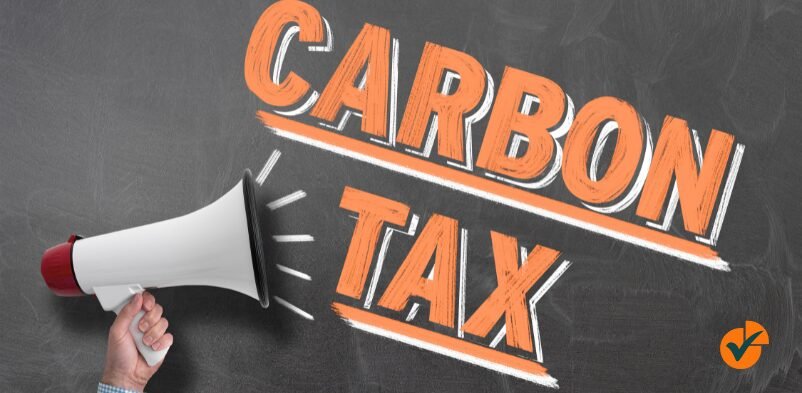
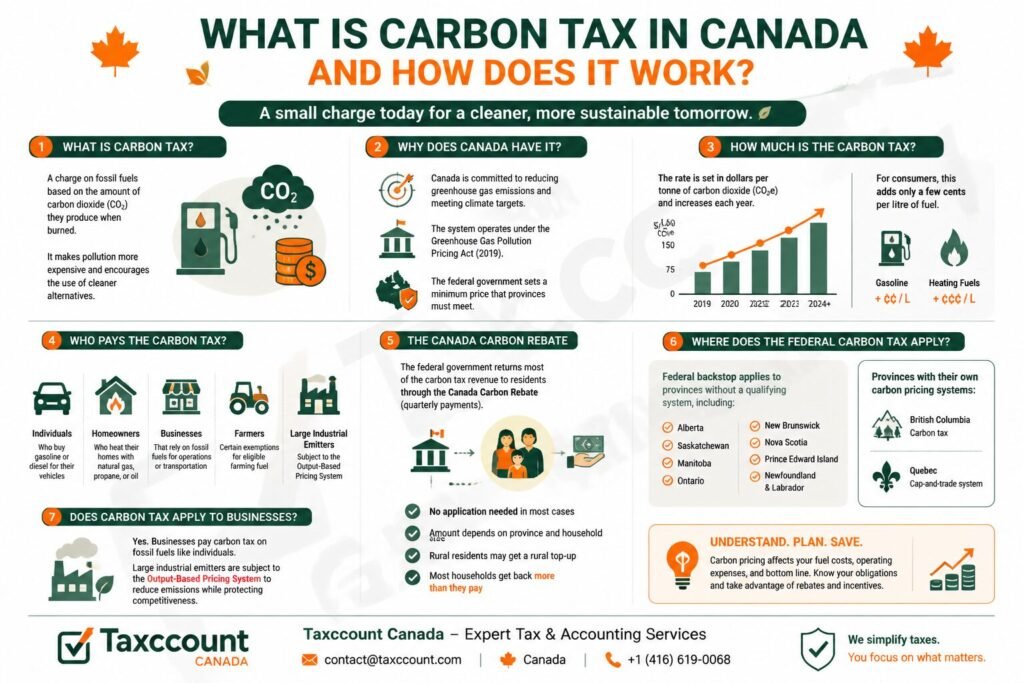
Carbon tax is a charge applied to fossil fuels based on how much carbon dioxide they produce when burned. Fossil fuels like gasoline, diesel, natural gas, propane, and coal all release carbon dioxide when used, which is a greenhouse gas that contributes to climate change.
The idea behind the tax is simple: make polluting more expensive so that individuals and businesses are motivated to use cleaner alternatives.
Understand Carbon Tax Better
☎️ Get HelpWhy Does Canada Have a Carbon Tax?
Canada introduced carbon pricing as part of its commitment to reducing greenhouse gas emissions and meeting climate targets. The federal system operates under the Greenhouse Gas Pollution Pricing Act and was introduced in 2019.
The federal government sets a minimum carbon price that all provinces must meet. Provinces that do not have their own qualifying system are subject to the federal backstop.
How Much Is the Carbon Tax?
The rate is expressed in dollars per tonne of carbon dioxide equivalent. For consumers, this translates to a few cents per litre on gasoline and slightly more on diesel and heating fuels.
The rate has increased gradually each year as part of the federal plan to make carbon pricing more effective over time.
Who Pays the Carbon Tax in Canada?
Almost everyone who uses fossil fuels pays carbon tax in some form. This includes:
- Individuals who purchase gasoline or diesel for their vehicles
- Homeowners who heat their homes with natural gas, propane, or oil
- Businesses that rely on fossil fuels for operations or transportation
- Farmers, though with certain exemptions for eligible farming fuel
- Large industrial emitters, who operate under the Output-Based Pricing System
What Is the Canada Carbon Rebate?
The federal government returns most of the carbon tax revenue directly to Canadian residents through the Canada Carbon Rebate, formerly called the Climate Action Incentive Payment. This rebate is paid in quarterly installments and does not require any application in most cases.
The amount you receive depends on:
- The province you live in
- The size of your household or family
- Whether you live in a rural area, which may qualify you for a rural top-up
Most households in provinces subject to the federal carbon pricing system receive more in rebates than they pay in carbon tax, particularly lower and middle-income families.
Which Provinces Are Subject to the Federal Carbon Tax?
The federal carbon pricing backstop applies to provinces that do not have a qualifying system of their own. These have included Alberta, Saskatchewan, Manitoba, Ontario, New Brunswick, Nova Scotia, Prince Edward Island, and Newfoundland and Labrador.
British Columbia has its own carbon tax that meets the federal standard. Quebec uses a cap-and-trade system that is also recognized under the federal framework.
Does Carbon Tax Apply to Businesses?
Yes. Businesses that use fossil fuels pay carbon tax the same way individuals do. Large industrial emitters, such as manufacturers and oil and gas producers, are subject to the Output-Based Pricing System, which is designed to encourage emissions reductions without harming competitiveness.
Need Help Understanding How Taxes Affect Your Finances?
Taxccount helps individuals, self-employed professionals, and corporations navigate Canadian tax obligations, including understanding how carbon pricing may affect your business or farming operation. Book a free consultation today to get clarity on your tax situation.
Table of Summary
Here is the blog information in 6 easy rows for quick understanding:
| Section | Easy Information |
|---|---|
| 1. Topic | The blog explains Canada’s carbon tax and how it affects consumers, businesses, and farmers. |
| 2. What Is Carbon Tax | A charge on fossil fuels based on the CO2 they emit, meant to make polluting more expensive and encourage cleaner alternatives. |
| 3. Why Canada Has It | Introduced under the Greenhouse Gas Pollution Pricing Act (2019) to meet climate targets and ensure provinces have a minimum carbon price. |
| 4. Who Pays | Individuals (gas, diesel, heating), businesses, large industrial emitters, and farmers (with some exemptions). |
| 5. Canada Carbon Rebate | CRA returns most of the revenue to residents quarterly. Amount depends on province, household size, and rural location; many households receive more than they pay. |
| 6. Provinces Subject | Federal backstop applies to Alberta, Saskatchewan, Manitoba, Ontario, New Brunswick, Nova Scotia, PEI, Newfoundland & Labrador. BC and Quebec have their own recognized systems. Businesses also pay, with industrial emitters under the Output-Based Pricing System. |
Frequently Asked Questions
Is carbon tax the same as GST?
No. Carbon tax is a separate charge applied to fossil fuels. GST is a general consumption tax on goods and services. However, GST is applied on top of the carbon tax, which means you are effectively paying tax on the carbon charge itself.
Do I need to apply for the Canada Carbon Rebate?
In most cases, no. If you file your income tax return each year, the CRA automatically calculates and issues the rebate. If you have never filed taxes before, filing your first return will make you eligible.
Does carbon tax apply in Quebec?
Quebec has its own cap-and-trade system rather than a direct carbon tax. This system is recognized by the federal government, so Quebec residents are not subject to the federal carbon pricing backstop.
Can farmers get an exemption from carbon tax?
Yes. Farmers can claim an exemption on eligible farming fuels used in tractors and other farm machinery. There are specific CRA rules about which fuels and activities qualify, so it is worth reviewing CRA guidance or speaking with a tax professional.
Ready to Make Sense of Your Canadian Taxes?
Whether you are a homeowner, a small business owner, or a farmer trying to understand how carbon pricing affects your costs and rebates, Taxccount is here to help. Our team of Canadian tax professionals can guide you through your obligations and ensure you claim every rebate and deduction you are entitled to. Book a free consultation with Taxccount today.
Claim Your Carbon Rebate
☎️ Get HelpThis is general information only and not professional advice. Consult a professional before acting.
 Written and fact-checked by Udit Gupta
 Written and fact-checked by
 Ex Big4, Ernst & Young, Deloitte | International & Cross-Border Tax Specialist | CPA Canada In Depth Tax Training | Licensed Chartered Accountant from ICAI & MIA
Udit Gupta has over 15 years of experience helping corporations & business owners with corporate structuring, corporate tax filing, bookkeeping, payroll, GST/HST, cross-border tax and CRA representation. Big 4 trained at Ernst & Young and Deloitte, and qualified as a Chartered Accountant in India and Malaysia, he founded accounting firm in 2014 to serve entrepreneurs, startups and non-resident business owners across Canada. View Full Member Bio.
Indian Institute of Chartered Accountant Member No. (521458) | Malaysian Institute of Accountants Membership number (CA 44667) | Ex Big4,Ex Ernst & Young (EY), Ex-Deloitte | CPA Canada In-Depth Tax Training 19 Dec 2023, 12 Jul 2022, 5 Jul 2023
Editorial policy. Every article is researched against primary sources — the Income Tax Act, CRA publications and CPA Canada.